
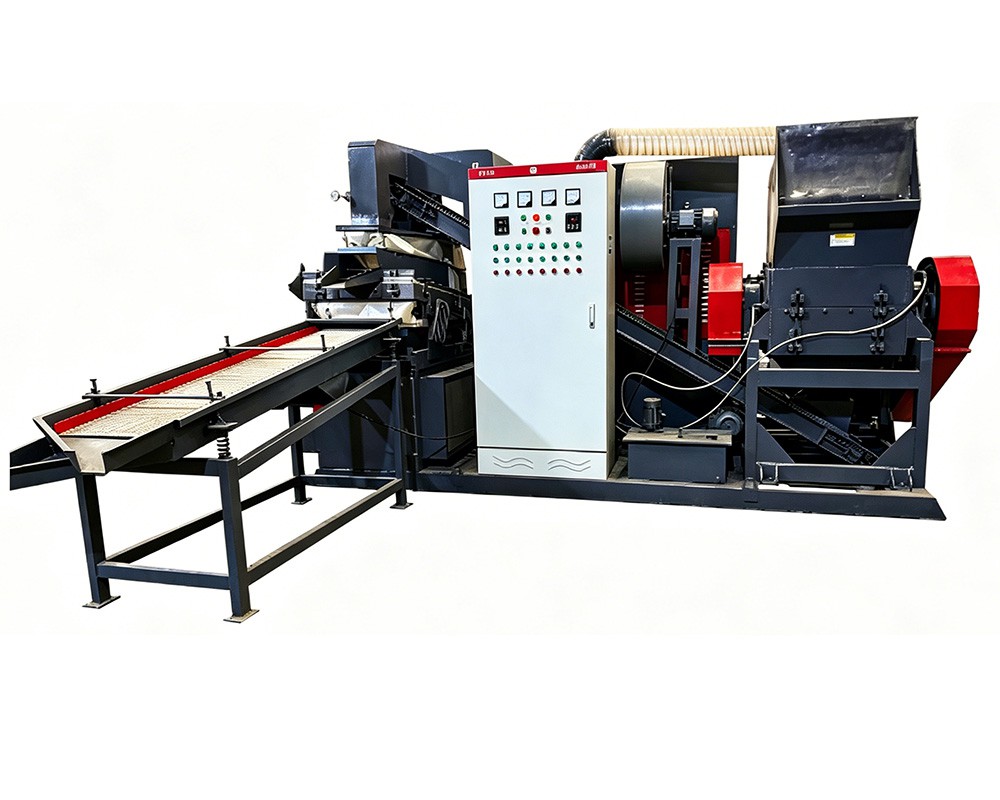
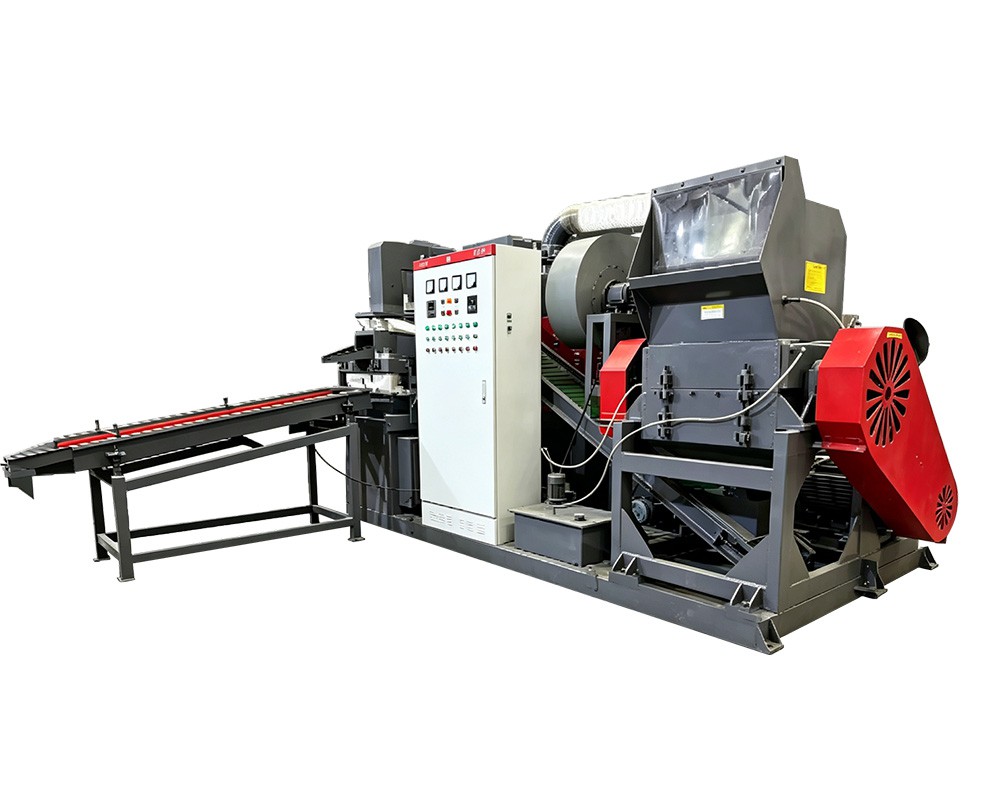
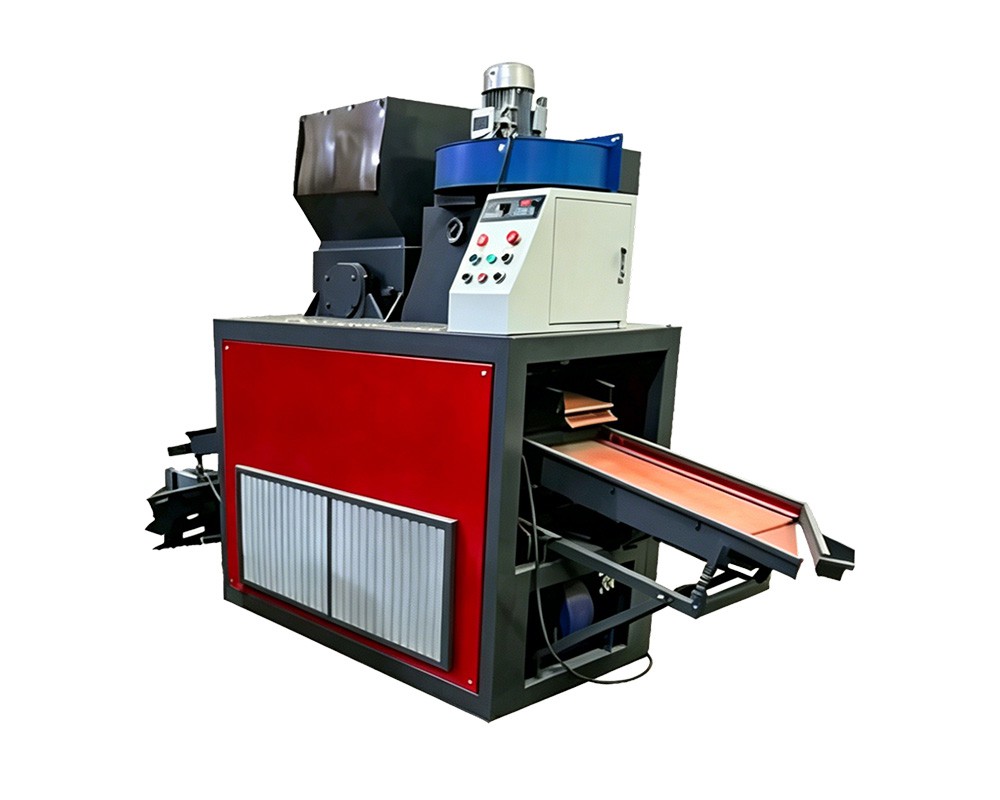
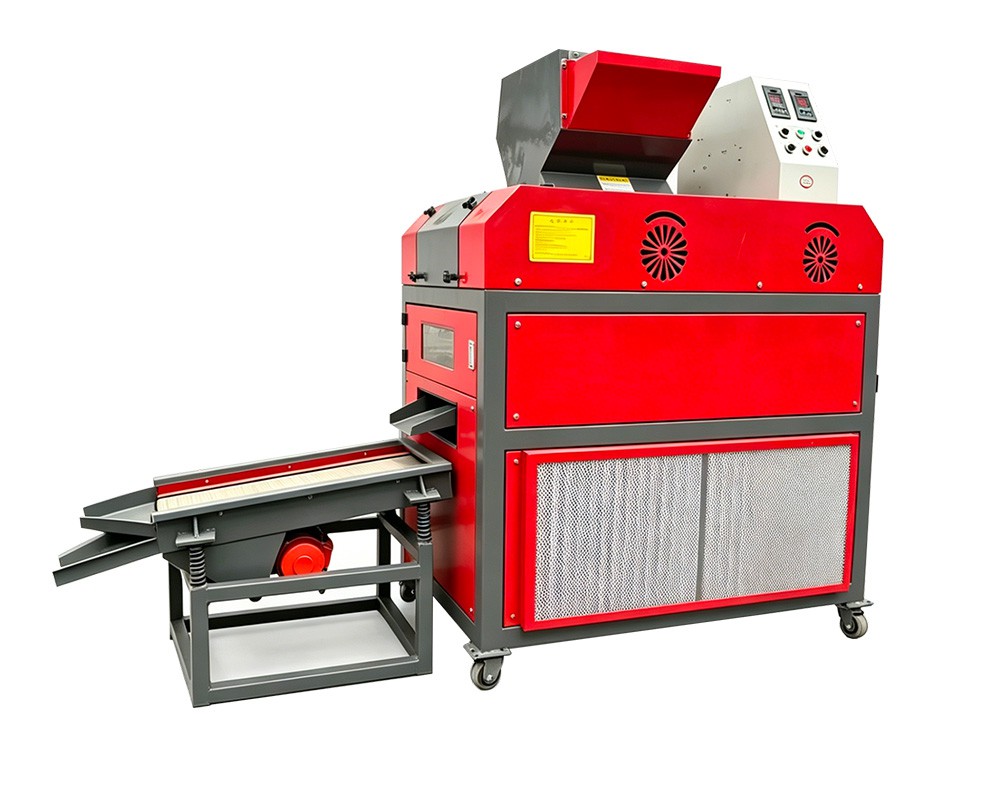
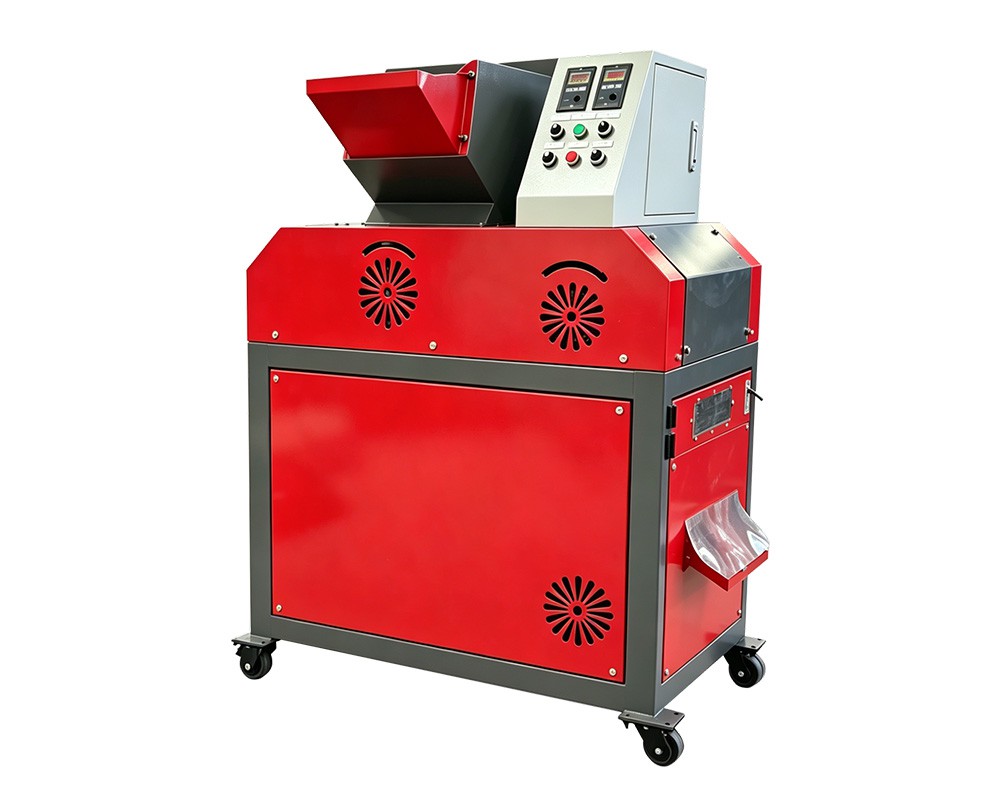
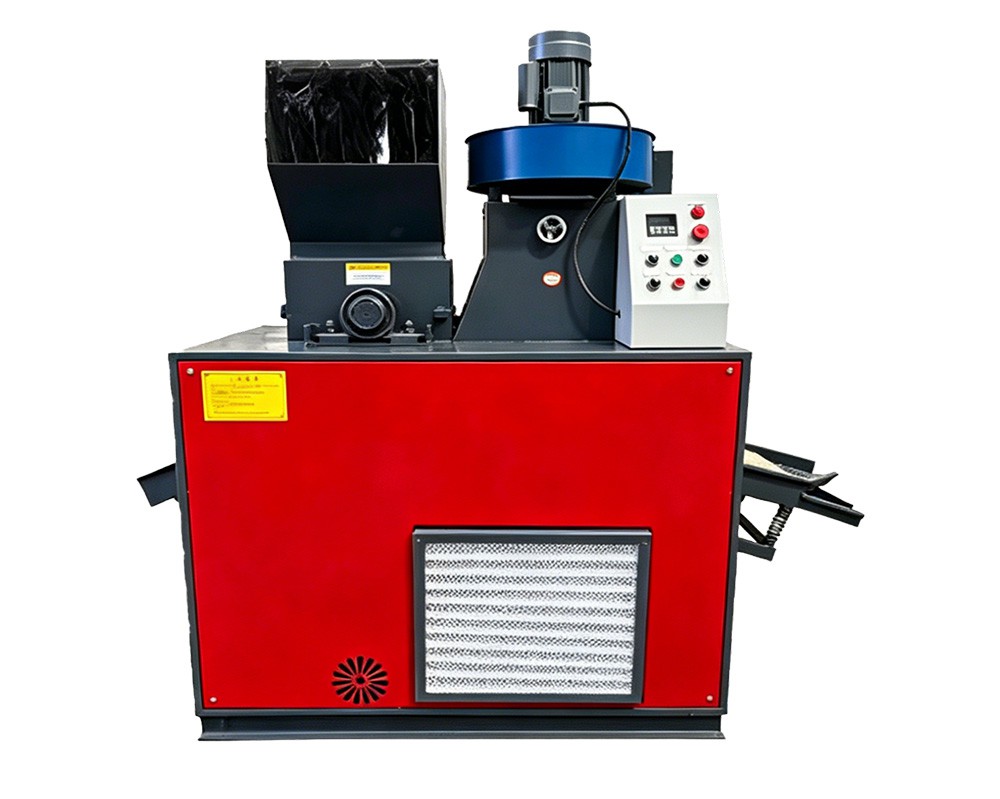
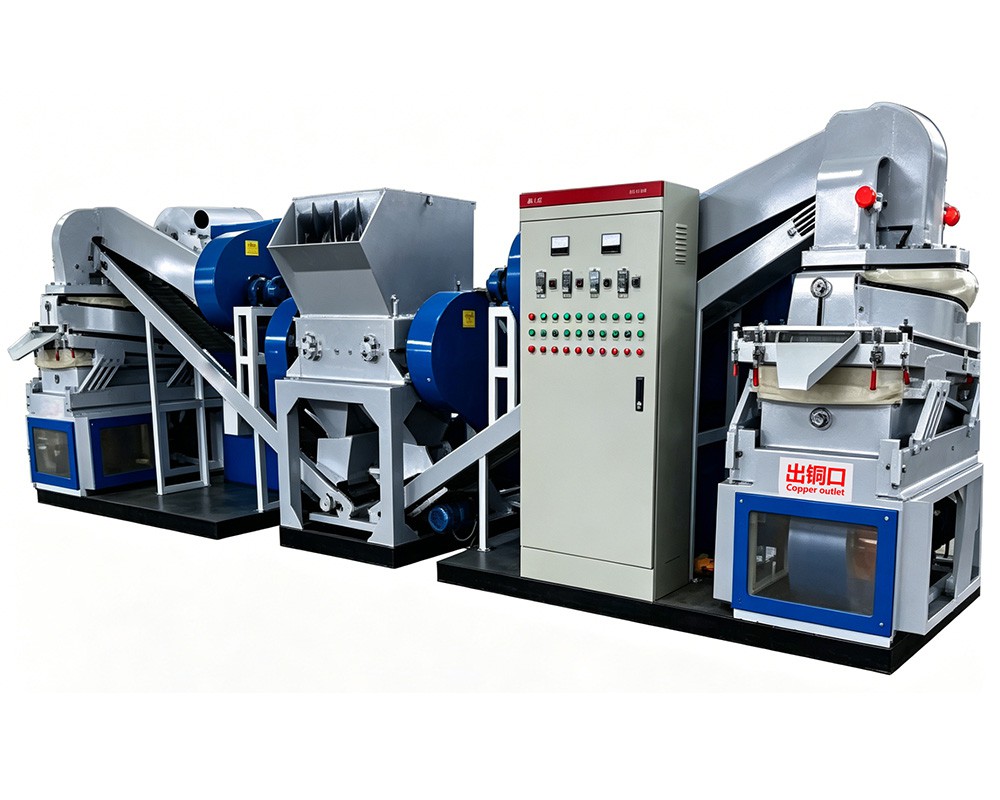
How to choose between the models on this page
Every machine listed here works on the same dry process. Cable is shredded, granulated against a screen, then separated by air and by electrostatic or gravity separation so that copper leaves as clean granules and insulation leaves as a separate plastic stream. No water and no chemicals are used, so the line needs no wastewater permit and no drying step before the copper is sold.
What separates the models is not the process but the cable they are asked to swallow. A bench-size granulator can choke on armoured cable and on tightly bundled harness; a production unit running at several hundred kilos an hour is wasted on clean single-core wire from a single demolition site. Match the model to the feed, not to the biggest number on the brochure.
What actually decides the model
- Cable mix. Household wire and single-core cable granulate cleanly in a compact machine. Automotive harness, armoured cable and mixed industrial scrap need a pre-shredding stage and a wider separation window.
- Hourly throughput. Published figures assume a steady feed of the right size. If your bales arrive loose and tangled, plan on the lower end of the range.
- Purity target. Buyers price on copper content. If your buyer wants 99% plus, budget for electrostatic separation and a dust collection stage rather than air separation alone.
- Floor space and power. The largest units need a long footprint and a substantial supply; check the installed power before you commit to a building.
What to send us for a recommendation
Photographs of the material, the percentage of harness or armoured cable in the mix, the tonnage you expect per month, the purity your buyer accepts and the dimensions of the room the machine will stand in. With those five answers we can name a model and a realistic hourly figure instead of quoting a range.
Frequently asked questions
Is a pre-shredder always needed?
No. Clean single-core cable and household wire usually feed a granulator directly. A pre-shredder earns its cost when the feed contains armoured cable, tightly bundled harness or long lengths that would wrap around the rotor.
How much copper is lost in the process?
Losses come from copper still attached to plastic in the light fraction. Well-set air and electrostatic separation keep that loss low; the exact figure depends on how fine the cable was granulated and how much tape and adhesive the feed contains.
Can the same machine handle both fine wire and thick cable?
Within limits. Screen size and blade clearance are set for one working range. A machine configured for thick cable will produce a coarser granulate than fine wire needs, so tell us the dominant material rather than the widest possible mix.